
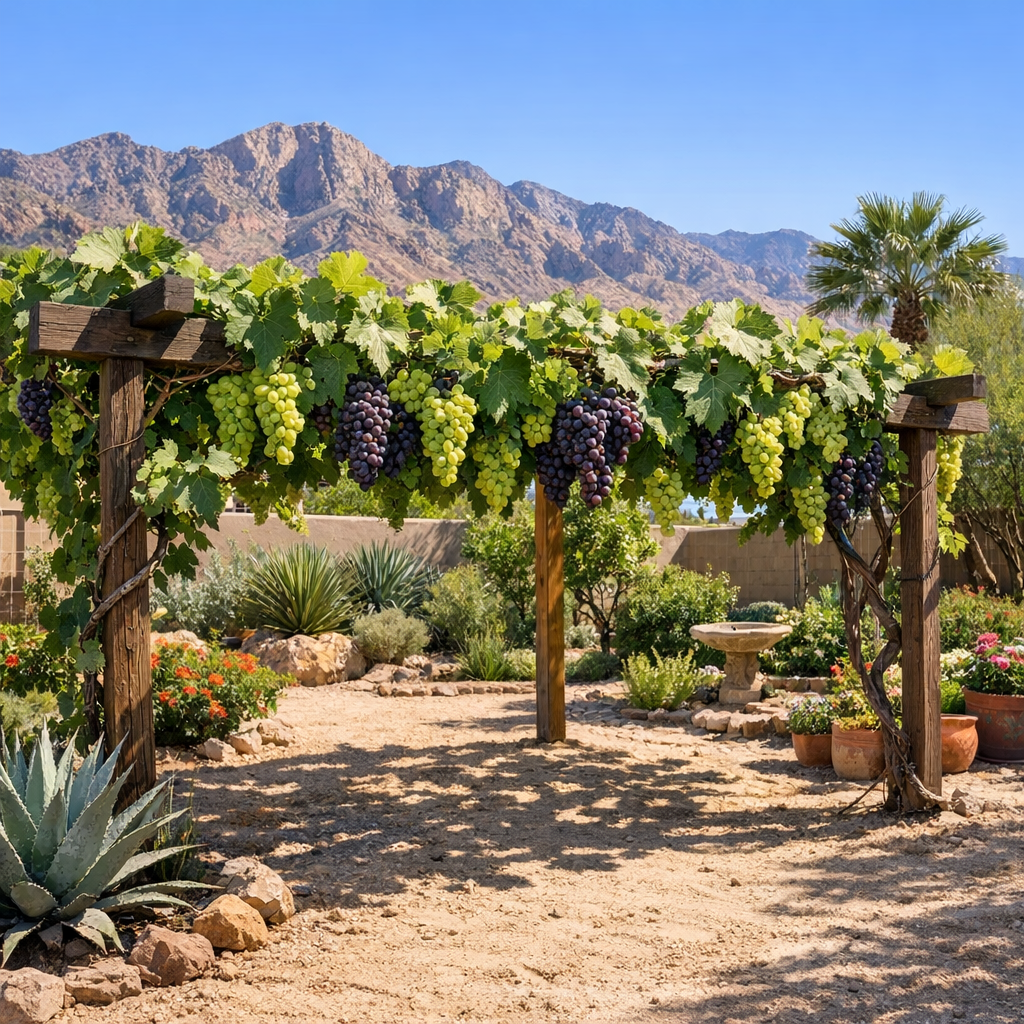
A Complete Growing Guide for Zone 9b Gardeners
If you’ve ever wondered whether you can successfully grow grapes in the Las Vegas desert, the answer is yes. In fact, grapevines often thrive in the Mojave Desert when they receive proper care. The region’s long, hot summers, low humidity, and abundant sunshine create an excellent environment for many grape varieties. The biggest challenges aren’t the temperatures but rather the alkaline soil, intense summer heat, and learning how to water efficiently. Make sure you pick the heat-tolerant varieties, with some mid day shade.
Whether you want fresh table grapes for snacking or dream of making your own wine, this guide will show you exactly how to grow grapes in Las Vegas and other desert climates in USDA Zone 9b.
Why Grapes Grow Well in Las Vegas
Many people assume grapes prefer cooler climates, but they’re naturally adapted to regions with warm summers and relatively dry conditions. Las Vegas provides plenty of sunshine and very little humidity, which helps reduce many fungal diseases that plague grape growers in wetter areas.
The biggest obstacle is the native desert soil. Much of the soil around Las Vegas is alkaline, compacted, and low in organic matter. Fortunately, this can be improved by incorporating compost and other soil amendments before planting.
Choosing the Best Grape Varieties for Las Vegas
Selecting heat-tolerant varieties is one of the most important steps toward success. Several table grapes perform exceptionally well in Southern Nevada, including :
- Thompson Seedless, a classic green grape known for its sweetness
- Flame Seedless, which produces juicy red fruit early in the season
- Green Niagara, valued for its abundant harvests
- Black Monukka, a flavorful variety with excellent heat tolerance
If you’re interested in wine production, Zinfandel is one of the best choices for desert climates because it handles high temperatures extremely well. Cabernet Sauvignon and Syrah also adapt successfully to hot growing conditions, although providing a little afternoon shade during the most intense summer days can help reduce stress on the vines.
Preparing the Right Soil
Healthy soil is the foundation of productive grapevines. Grapes prefer well-draining sandy or loamy soil with a pH between 5.5 and 7.0. Since Las Vegas soils are often more alkaline than ideal, adding compost before planting can improve both drainage and nutrient availability.
Gardeners with especially high pH levels may also benefit from using elemental sulfur or another soil acidifier after confirming soil conditions with a soil test. Mixing aged manure into the planting area provides additional nutrients while increasing organic matter that helps roots establish more quickly.
How Much Sun Do Grapes Need?
Grapevines are sun-loving plants that require at least six to eight hours of direct sunlight each day to produce quality fruit. In most Las Vegas gardens, a location that receives morning and afternoon sun is ideal. Though some mid day shade will prevent leaf burn and increase longevity.
During extreme heat waves when temperatures exceed 110°F, young vines may benefit from temporary shade cloth during the hottest part of the afternoon. Mature vines, however, usually tolerate desert heat remarkably well once established.
When and How to Plant Grapes
The best time to plant grapes in Las Vegas is from late winter through early spring, typically between February and March, when temperatures are mild and roots can establish before summer arrives. Fall planting is also an excellent option because cooler weather encourages root development before the following growing season.
Space individual vines six to eight feet apart and leave eight to ten feet between rows if planting multiple vines. Installing a sturdy trellis or arbor at planting time makes training much easier and promotes healthy airflow that reduces disease problems later.
Watering Grapes in the Desert
Water management is one of the most important aspects of growing grapes in Southern Nevada. Newly planted vines need consistent moisture while establishing their root systems and generally require deep watering two or three times each week during their first year.
Once mature, grapevines become surprisingly drought tolerant and often perform best with deep irrigation every seven to ten days rather than frequent shallow watering. Drip irrigation works particularly well because it delivers water directly to the roots while minimizing evaporation.
Adding several inches of mulch around the base of each vine helps retain soil moisture, regulate soil temperature, and reduce weed growth throughout the growing season.
Fertilizing for Healthy Growth
Unlike some fruit trees, grapes are moderate feeders and typically do not require heavy fertilization. Applying a balanced fertilizer such as 10-10-10 in early spring provides nutrients for new growth, while a small nitrogen boost later in spring can help if vines appear weak or slow to develop.
Many home gardeners prefer organic options like compost tea or fish emulsion, both of which provide nutrients without encouraging excessive leafy growth. Too much fertilizer can actually reduce fruit production by causing the plant to focus on foliage instead of grapes.
When Are Grapes Ready to Harvest?
Most grape varieties reach maturity approximately 90 to 120 days after fruit set, with harvest usually occurring during mid to late summer in Las Vegas.
Rather than relying solely on color, taste a few grapes directly from the vine. Ripe grapes develop full color, become noticeably sweeter, and soften slightly while remaining firm enough to hold their shape.
Common Pests and Problems
Although Las Vegas’ dry climate limits many fungal diseases, grape growers should still watch for aphids, spider mites, and leafhoppers. Regular inspections allow problems to be caught early before populations become difficult to control.
Neem oil can help manage many insect pests, while strong sprays of water often reduce spider mite infestations. Encouraging beneficial insects in the garden also provides natural pest control. Birds may become interested as grapes ripen, so covering vines with netting can prevent significant crop losses.
Protecting Grapevines from Desert Weather
Extreme weather occasionally requires additional care. Young vines should be protected from strong winds that can damage tender shoots, and excessive sun exposure in the first few years and applying mulch around the base helps moderate soil temperatures during both summer and winter.
When prolonged heat pushes temperatures above 110°F, temporary shade cloth can reduce stress and prevent sunburn on leaves and developing fruit.
Companion Plants for Grapes
Several companion plants work well alongside grapevines in desert gardens. Marigolds naturally deter many insects, and basil contributes to overall garden biodiversity. Surprisingly, raising chickens near them (not right on top) can deter Western Grapeleaf Skeletonizers,
Avoid planting grapevines too close to large trees, as competing root systems can steal valuable water and nutrients.
Final Thoughts on Growing Grapes in Las Vegas
Growing grapes in Las Vegas is easier than many gardeners expect. With the right variety, improved soil, deep watering practices, and proper training, grapevines can become one of the most productive long-term additions to a desert landscape. Once established, healthy vines can continue producing delicious fruit for decades while adding beauty and shade to your garden.
If you’re gardening in USDA Zone 9b, grapes are well worth considering as a reliable and rewarding crop for your backyard orchard. During the spring I offer cuttings: https://vansgarden.com/product/niagra-grape-cuttings/