
Learning how to grow okra is essential for home gardeners in hot, dry regions such as Las Vegas and Southwest Zone 9b. With the right techniques, this heat-tolerant crop can thrive even in desert climates. Use this guide to cultivate productive okra plants and improve your garden’s resilience.
What Is Okra and Why Grow It?
Okra, or “lady’s fingers,” is a warm-season vegetable valued for its nutrient-rich pods packed with fiber, vitamins, and antioxidants. Beyond its culinary uses in dishes like gumbo and stir-fries, okra attracts pollinators and adapts exceptionally well to high heat, making it an excellent choice for desert gardening.
Best Heat-Tolerant Okra Varieties for Las Vegas
Selecting the right cultivar is key to strong growth in extreme heat. Top-performing varieties include:
- Clemson Spineless – dependable, productive, and excellent in high heat
- Burgundy – ornamental red pods with strong heat tolerance
- Louisiana Green Velvet – vigorous plants ideal for long, hot summers
- Annie Oakley II – compact and fast-maturing
- Perkins Long Pod – productive and well-suited for desert climates
When to Plant Okra in Las Vegas
Plant okra from March through June, once daytime temperatures consistently remain between 70°F and 95°F. If you want to cheat, consider using a heat dome on cold days. Soil should reach at least 65°F before planting seeds to ensure quick germination.
Soil Requirements and Desert-Friendly Amendments
Okra grows best in sandy-loam soil with strong drainage. Aim for a pH between 6.0 and 7.5. To improve soil structure and support root growth:
- Add organic compost for nutrient density
- Incorporate perlite or coarse sand to boost drainage
- Mulch heavily to preserve moisture in desert climates
Sunlight Needs and Heat Protection
Okra thrives in full sun with 6–8 hours of direct light daily. During extreme heat waves, provide light afternoon shade using shade cloth or nearby tall crops to prevent leaf stress and scorching.
Desert Watering Schedule
Deep, infrequent watering supports strong root development. Water okra every 3–7 days, keeping soil moist but never waterlogged. Drip irrigation is ideal for reducing evaporation and maintaining consistent moisture.
Fertilizing for Maximum Pod Production
Use organic slow‑release fertilizers or soil rich in compost. Steady nutrition helps sustain vigorous vegetative growth and continuous pod formation throughout the season.
Harvest Timing and Tips
Okra is typically ready 50–70 days after planting. Harvest pods when they reach 2–4 inches long by cutting them with shears. Frequent picking encourages new pod development and prevents tough, fibrous growth.
Common Pests and Organic Treatment Options
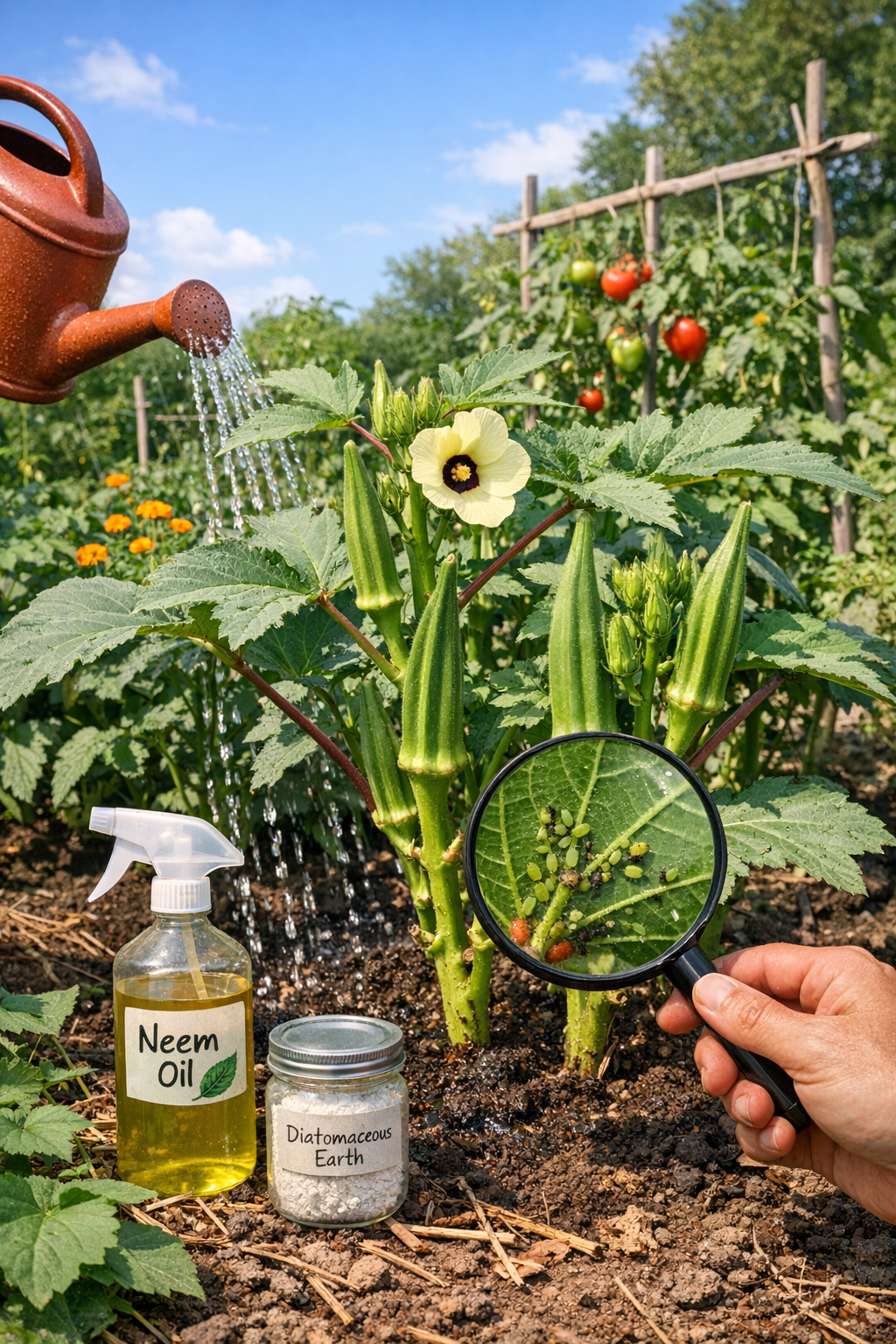
In desert gardens, watch for aphids, spider mites, and whiteflies. Effective organic controls include:
- Neem oil
- Insecticidal soap
- Strong water sprays to remove pests from foliage
Inspect plants weekly to prevent infestations from spreading.
Weather Protection in Desert Climates
Shield okra from hot winds using windbreaks or mesh netting. During surprise frosts, cover plants with frost blankets. On extremely hot days, increase airflow around plants to prevent heat stress.
Companion Plants That Support Okra
These companion plants enhance growth, improve soil health, and help deter pests:
- Beans
- Peppers
- Basil
- Melons
Continue Your Desert Gardening Journey
Mastering how to grow okra in the Las Vegas desert can elevate your gardening success and increase your homegrown harvests. For more resources, seeds, and tools tailored to desert gardening, visit our blog or shop at vansgarden.com.
Explore additional guides on Nevada gardening, heat‑tolerant vegetables, and long‑season plant care on our website.