
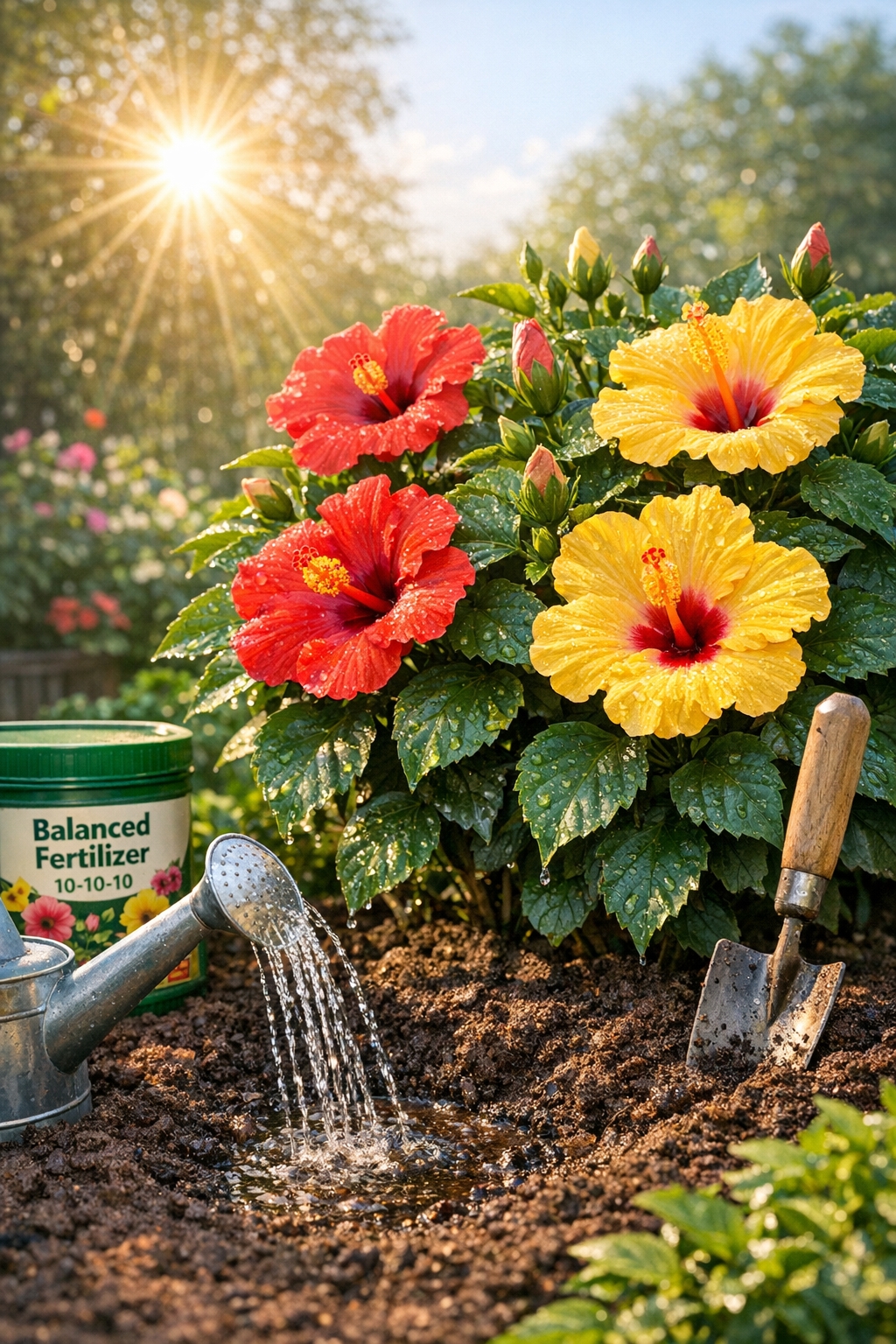
What Is Hibiscus?
Hibiscus plants are prized for their large, colorful blooms that attract pollinators and brighten any landscape. Beyond their ornamental value, hibiscus flowers and leaves are used in teas, culinary recipes and traditional remedies. If you’re lucky, you’ll find some that are acclimated to our desert climate at the seed swaps.
Heat-Tolerant Hibiscus Varieties for Southwest Climates
- Hibiscus rosa-sinensis: Glossy foliage and bold blooms thrive in high heat and full sun.
- Hibiscus moscheutos: Also called hardy hibiscus, it adapts to desert heat and tolerates occasional moisture stress.
- Hibiscus syriacus (Rose of Sharon): A drought-resilient shrub with long flowering seasons in Zone 9b.
- Hibiscus coccineus (Scarlet Rosemallow): Native to heat zones, it handles high temperatures and draws hummingbirds.
- Roselle (Hibiscus sabdariffa): prized for its tart, edible red calyxes, which are used in tea, jams, and jellies. These may require more shade that other hibiscus.
Planting Hibiscus in Las Vegas
When to Plant
- Spring: March–May, after last frost.
- Fall: September–October, when temperatures moderate (65°F–85°F).
Soil Requirements
- Texture: Sandy or loamy soil for quick drainage.
- pH: Slightly acidic to neutral (6.0–7.5).
- Amendments: Work in compost, perlite or pumice to improve aeration.
Spacing & Site Selection
- Spacing: 3–6 feet apart to ensure adequate air circulation.
- Sun Exposure: Full sun (6–8 hours/day). Provide afternoon shade during peak summer heat.
Watering & Irrigation
Hibiscus require consistent moisture but dislike waterlogged roots:
- Schedule: Deep watering twice weekly, increasing frequency during heat waves.
- Technique: Water soil to 12–18 inches deep; use drip irrigation or soaker hoses for efficiency.
- Monitoring: Employ a moisture meter to maintain balanced soil moisture.
Fertilizing Hibiscus
- Type: Low phosphorous, slow-release fertilizer (12-4-8 NPK) or specialized hibiscus formula.
- Frequency: Apply every 6 weeks during the active growing season (spring–early fall).
- Organic Boosters: Incorporate bone meal, seaweed extract or compost tea for micronutrients and improved soil health.
Pest & Disease Management
- Common Pests: Aphids, spider mites and whiteflies.
- Treatments: Spray neem oil or insecticidal soap weekly until control is achieved.
- Disease Prevention: Ensure good airflow, avoid overhead watering and remove diseased foliage promptly.
Weather Protection Strategies
- High Winds: Install garden stakes or windbreak fencing.
- Extreme Heat: Apply a 2-inches layer of organic mulch to moderate soil temperature and conserve moisture.
- Cold Spells: Use frost cloths for dips below 32°F.
Harvesting Hibiscus Flowers
Collect blooms in the early morning when petals are fully open:
- Tea & Culinary Use: Harvest most varieties within 90 days of planting.
- Drying Tips: Spread petals in a single layer on a screen or dehydrator at low heat for long-term storage.
Companion Planting
- Lavender: Repels pests and complements hibiscus blooms.
- Marigolds: Deter nematodes and enhance garden color contrast.
- Basil: Attracts beneficial insects and improves overall garden health.
Conclusion
Growing hibiscus in Las Vegas Zone 9b is rewarding when you select heat-tolerant varieties, prepare well-draining soil and maintain consistent irrigation and fertilization. With these expert tips, your desert garden will burst with tropical blooms year after year.