
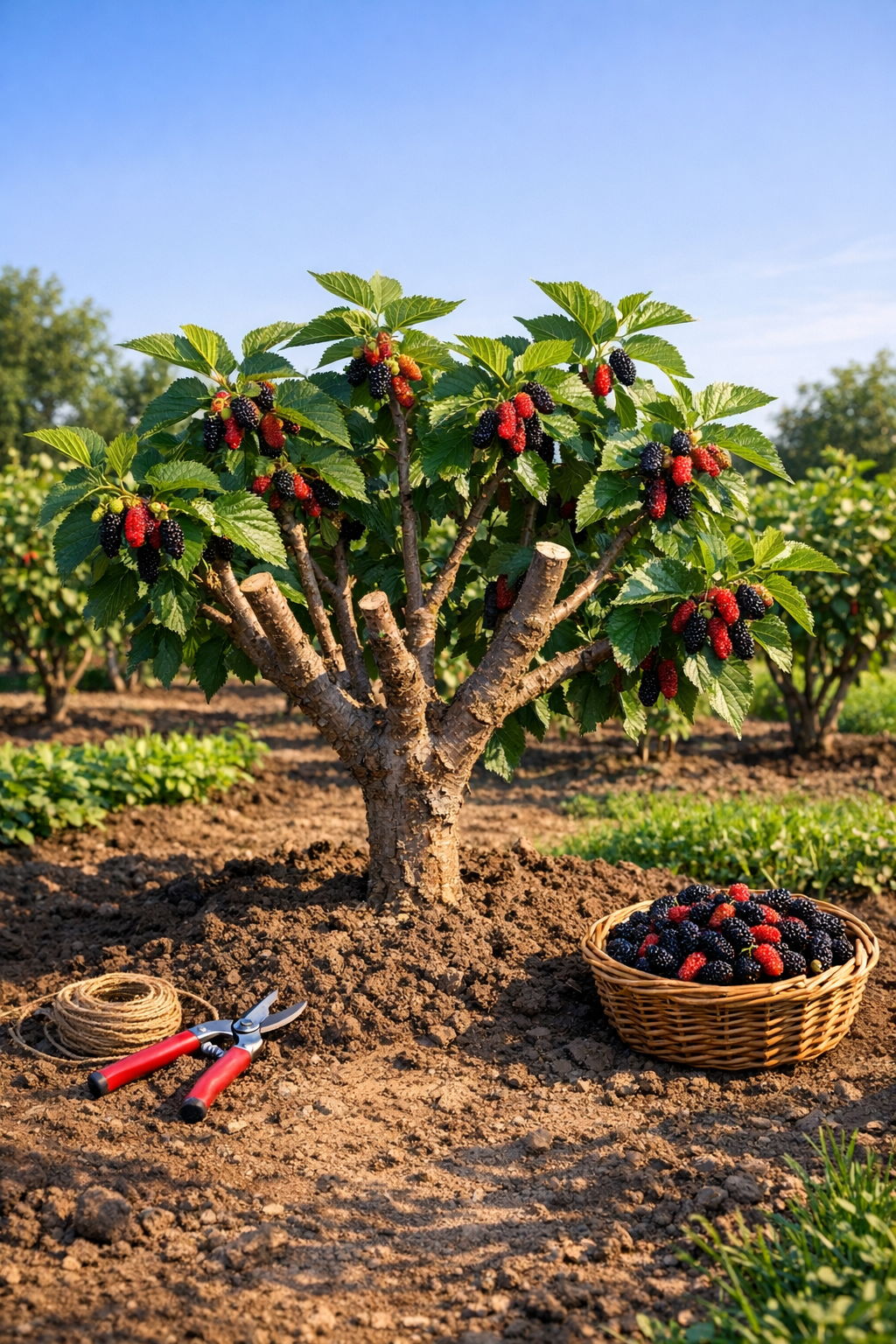
Mastering Mulberry Cultivation
Learning how to grow Mulberry trees can transform your yard into a productive, shade‑giving, fruit‑filled space even in extreme heat. This guide provides clear, reliable, desert‑adapted strategies for gardeners in Las Vegas and other hot, dry regions. With the right approach, Mulberries thrive in Southwest zone 9b and beyond.
What Makes Mulberry Trees Ideal for Desert Gardening?
Mulberry trees are heat‑tolerant, drought‑resilient, and fast‑growing. Their berries are sweet, nutrient‑dense, and useful for fresh eating, baking, and natural remedies. These trees also attract pollinators, improve biodiversity, and require minimal maintenance once established.
Best Heat‑Tolerant Mulberry Varieties for Hot Climates
Selecting the right Mulberry variety is essential for optimal performance in high‑heat regions such as Las Vegas. Top choices include:
- Black Mulberry (Morus nigra): Exceptional flavor and strong heat tolerance.
- White Mulberry (Morus alba): Highly adaptable, drought‑resistant, and productive.
- Red Mulberry (Morus rubra): Handles intense heat and variable soils extremely well.
- Pakistan Mulberry (Morus macroura): Has long fruits. May have some buring leaves in the hottest part of the garden in the first couple years, but with correct watering and fertilization the problem with fix itself.
How to Plant Mulberry Trees in Hot, Arid Climates
Best Planting Time
Plant from late fall through early spring (October–February) when temperatures stay between 60°F and 80°F. Cooler months help young roots establish before summer heat intensifies.
Soil Requirements
Mulberries prefer well‑drained, sandy or compost rich soils with a slightly acidic to neutral pH (5.5–7). Improve desert soil by mixing in compost for organic matter and perlite for drainage.
Sunlight and Watering
- Sunlight: Provide full sun exposure for 6–8 hours daily.
- Watering: Water deeply once per week in summer. Rewater when the top 2 inches of soil are dry.
Mulberry Tree Care: Fertilizing, Pruning, and Pest Control
Fertilization
Apply a balanced organic fertilizer (such as 10‑10‑10 NPK) in early spring. Slow‑release options provide steady nutrients through the growing season.
Pest Management
Common pests include aphids and caterpillars. Treat infestations using neem oil, insecticidal soap, or other organic controls.
Pruning Tips
Prune in late winter to remove weak branches, improve airflow, and encourage strong fruiting growth.
Harvesting Mulberries
Expect fruit 1–3 years after planting. Ripe berries are dark in color and drop easily with a gentle pull or shake.
Protecting Mulberry Trees from Extreme Weather
- Heat protection: Use shade cloth for young trees during peak summer heat.
- Wind protection: Stake young trees to prevent root disturbance.
- No need for winter protection as they become dormant.
Best Companion Plants for Mulberry Trees
- Borage: Attracts pollinators and repels common pests.
- Comfrey: Enhances soil structure and provides nutrient‑rich mulch.
Conclusion
Growing Mulberry trees in hot, dry regions is easier than many gardeners expect. With the right heat‑tolerant varieties, soil preparation, and care routine, your Mulberry can thrive and produce abundant fruit in desert conditions. For more desert gardening resources, seeds, and tools, visit vansgarden.com.